Blog
How people actually write across languages.
Comparisons, workflows, and trust notes on mixed-language typing—without treating every language change as a keyboard change.
Want install steps or a build? Read the docs · View downloads
Blog
Comparisons, workflows, and trust notes on mixed-language typing—without treating every language change as a keyboard change.
Want install steps or a build? Read the docs · View downloads
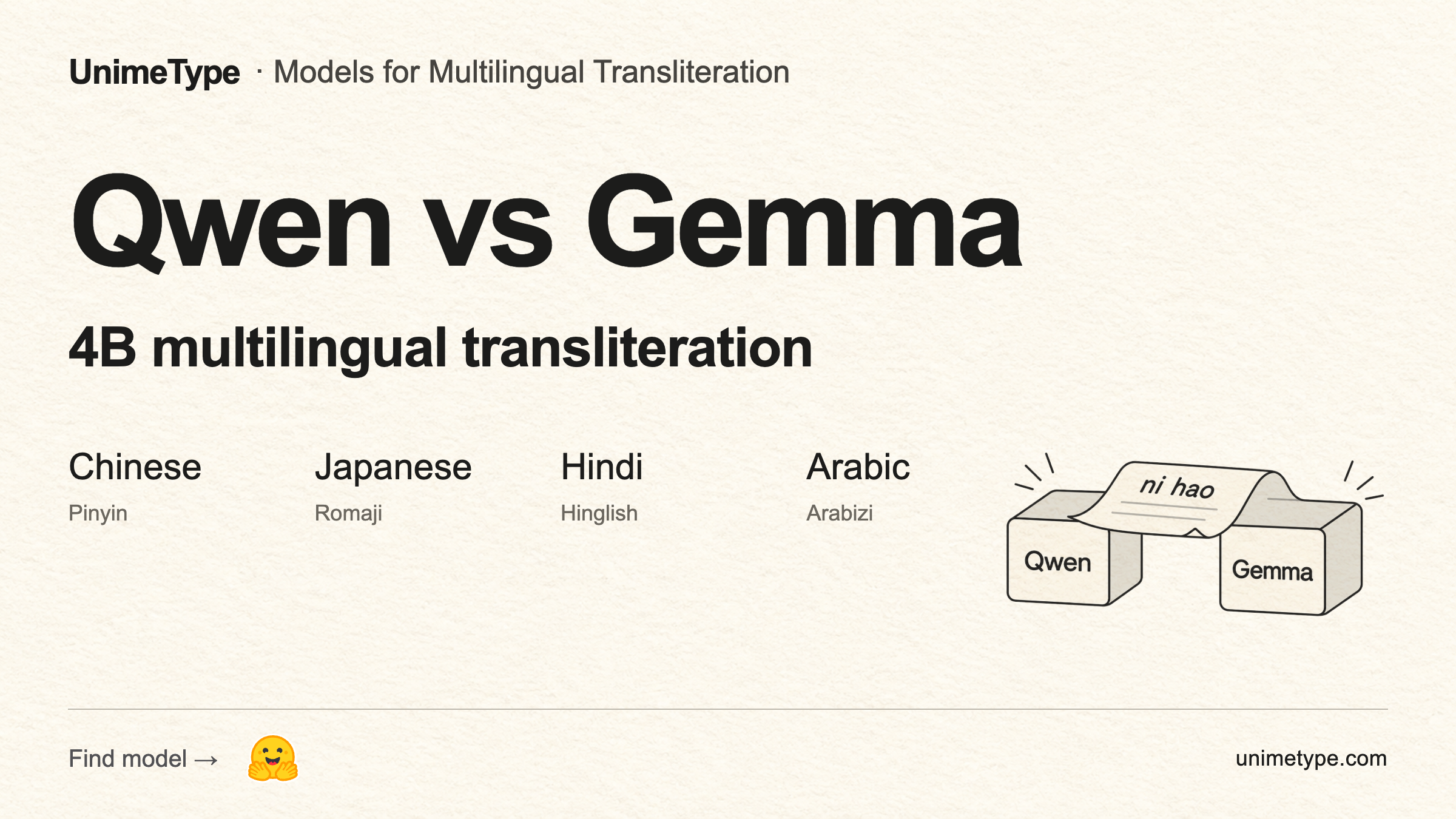
Qwen3.5-4B vs Gemma 3 4B results from the same 127-case Convert evaluator for Chinese, Japanese, Hindi, and Arabic—and why UnimeType chose Qwen.
LatestTransliteration Model Series4 min read

A transliteration model needs mixed messages, slang, names, code, emoji, and ambiguous spellings—not parallel translation sentences.
Transliteration Model Series2 min read

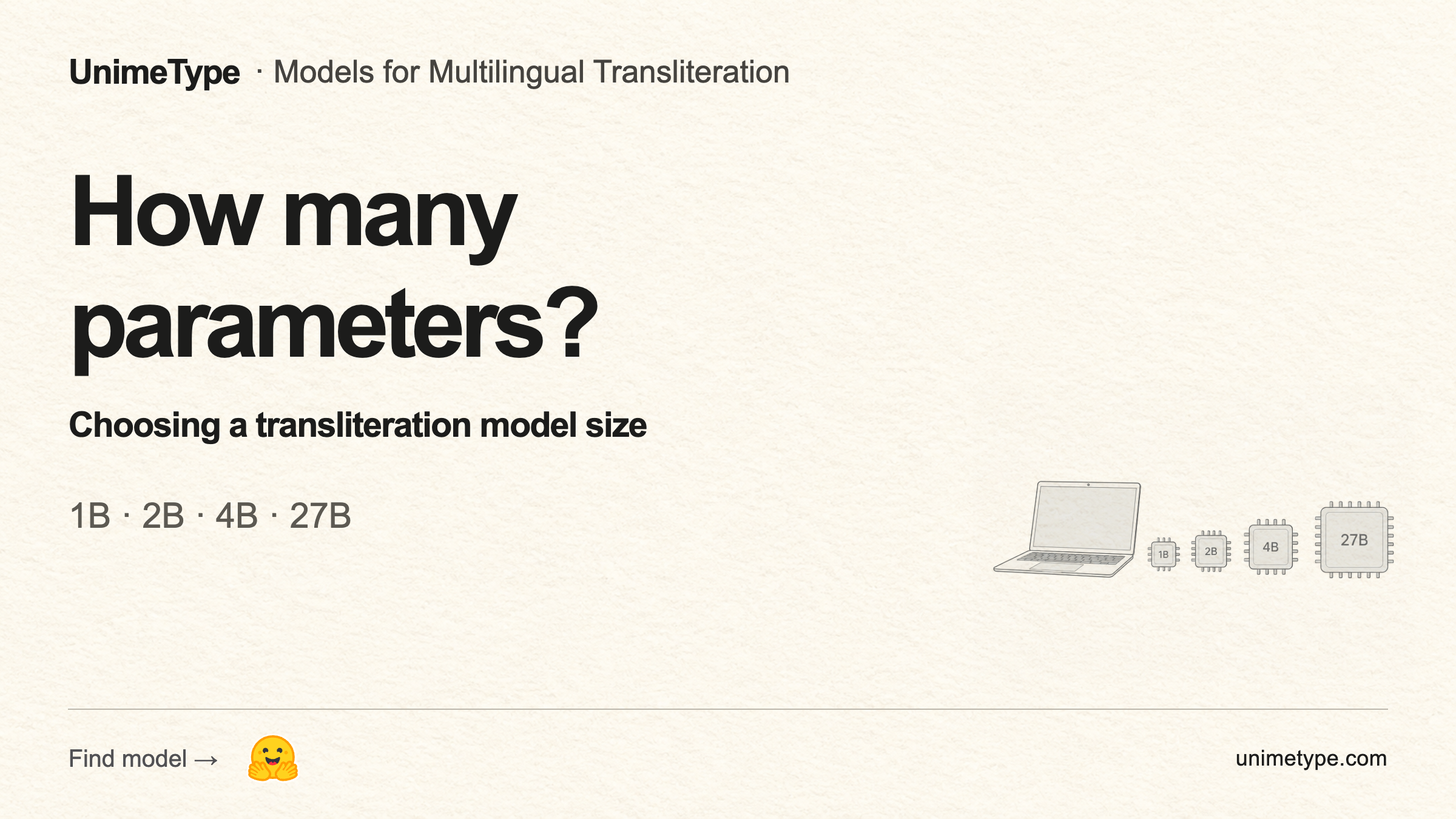
A practical way to choose model size for local Chinese, Japanese, Hindi, and Arabic transliteration without confusing size with task accuracy.
Transliteration Model Series2 min read

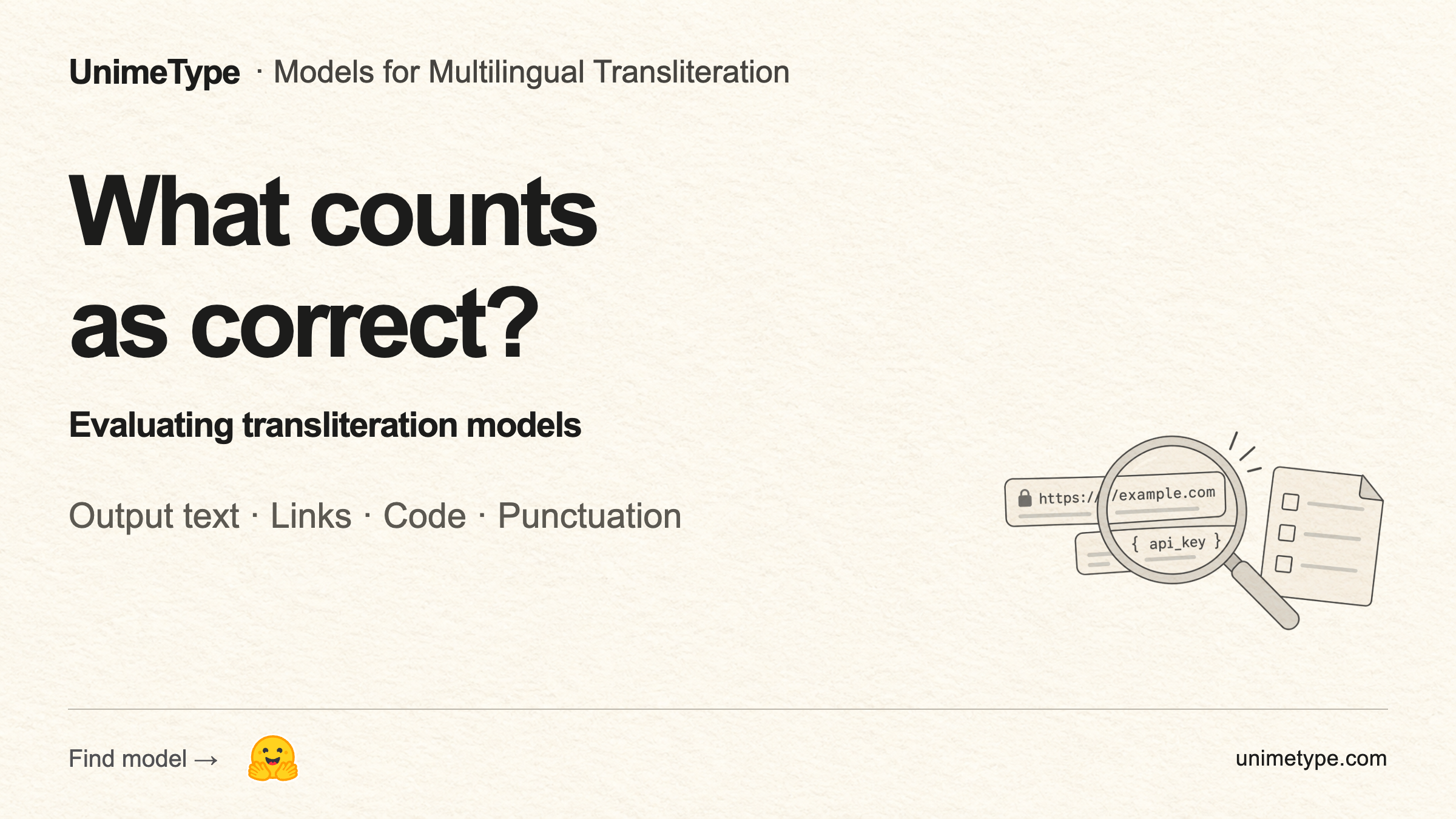
Why exact match, per-language slices, protected spans, controls, and runtime tests all matter for a local Convert model.
Transliteration Model Series2 min read

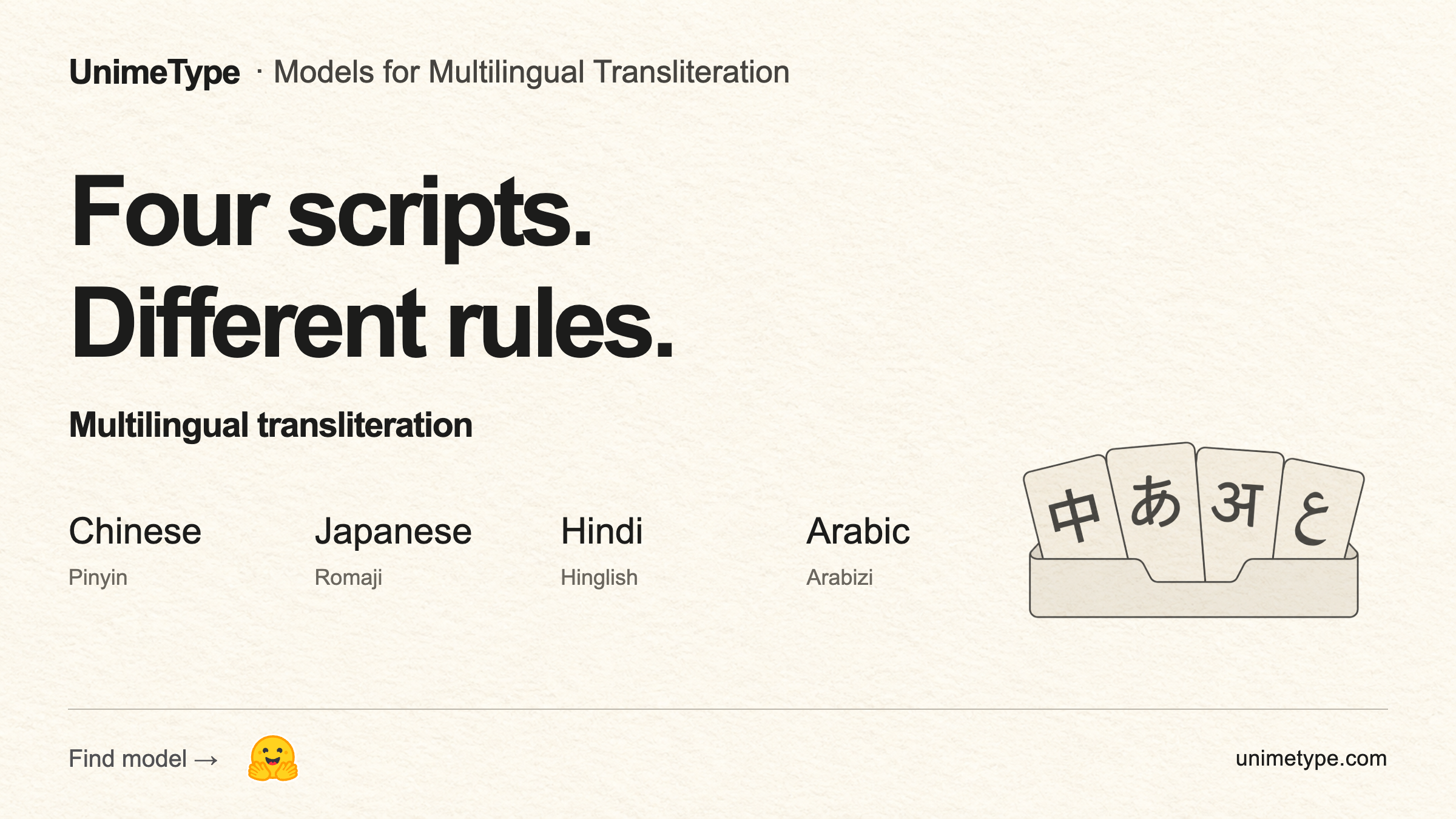
Chinese, Japanese, Hindi, and Arabic start from Latin letters, but ambiguity, code-switching, dialect, and target scripts differ sharply.
Transliteration Model Series2 min read

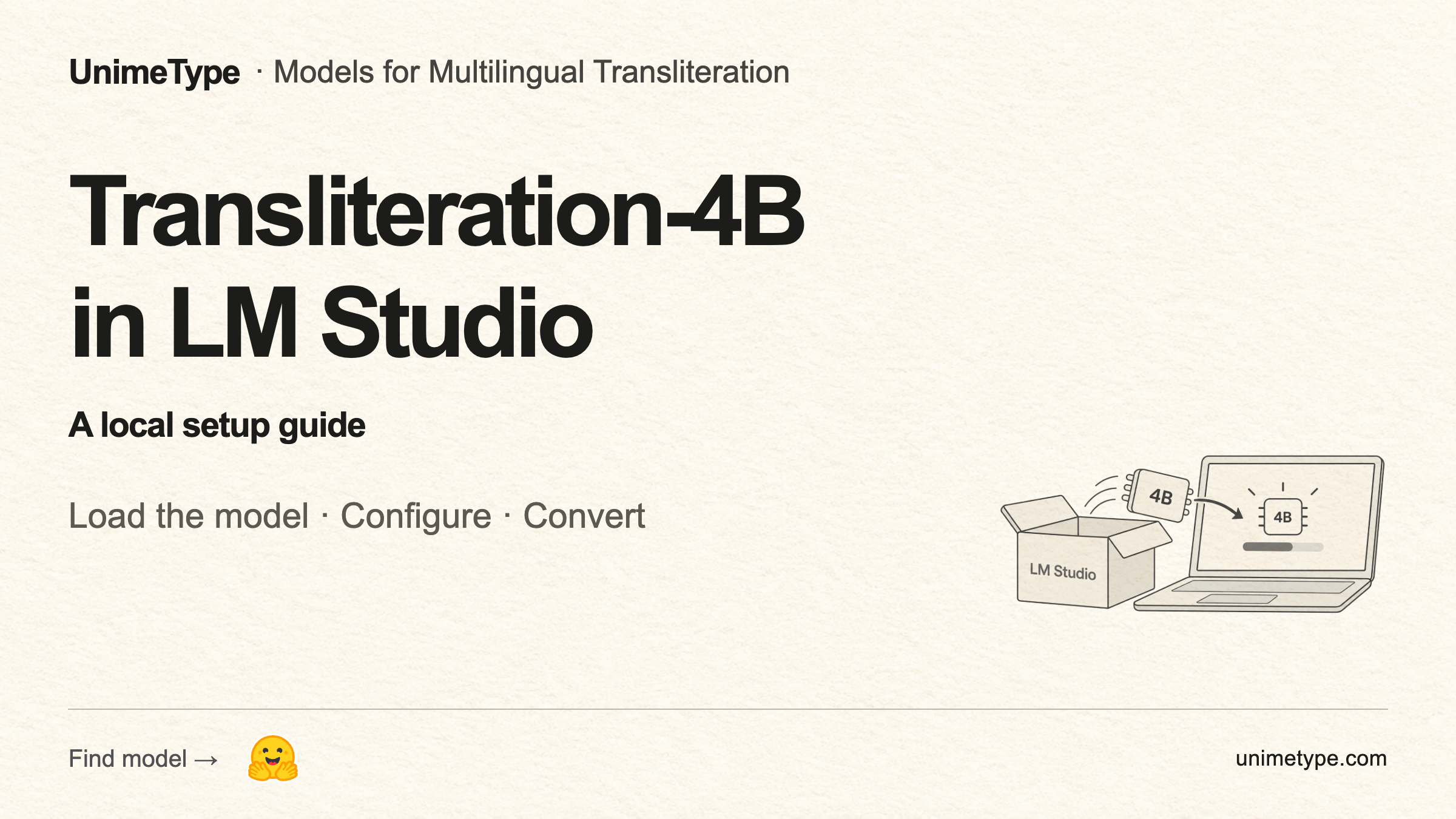
Download, load, and test the 4B multilingual Convert model locally with Chinese Pinyin, Japanese Romaji, Hinglish, and Arabizi.
Transliteration Model Series2 min read

Transliteration is not translation or general writing. See why UnimeType separates Convert from cloud-based Polish and Explain actions.
Transliteration Model Series2 min read
Showing all 7 posts